Exploring employment opportunities in Croatia
As a member of the European Union and the Schengen area, Croatia employs a modernized Single Permit system uniting residence and labor rights across tourism, logistics, technical trades, and professional sectors.

Unified residency and work authorization in the Republic of Croatia
Croatia operates under the Foreigners Act (Zakon o strancima), establishing the Single Permit (Jedinstvena dozvola za boravak i rad) as the primary pathway for third-country nationals.
The procedure relies on formal collaboration between two government bodies: the Ministry of the Interior (Ministarstvo unutarnjih poslova — MUP), which governs residency and biometric credentials, and the Croatian Employment Service (Hrvatski zavod za zapošljavanje — HZZ), which assesses labor market dynamics.
Key economic hubs and employment landscapes
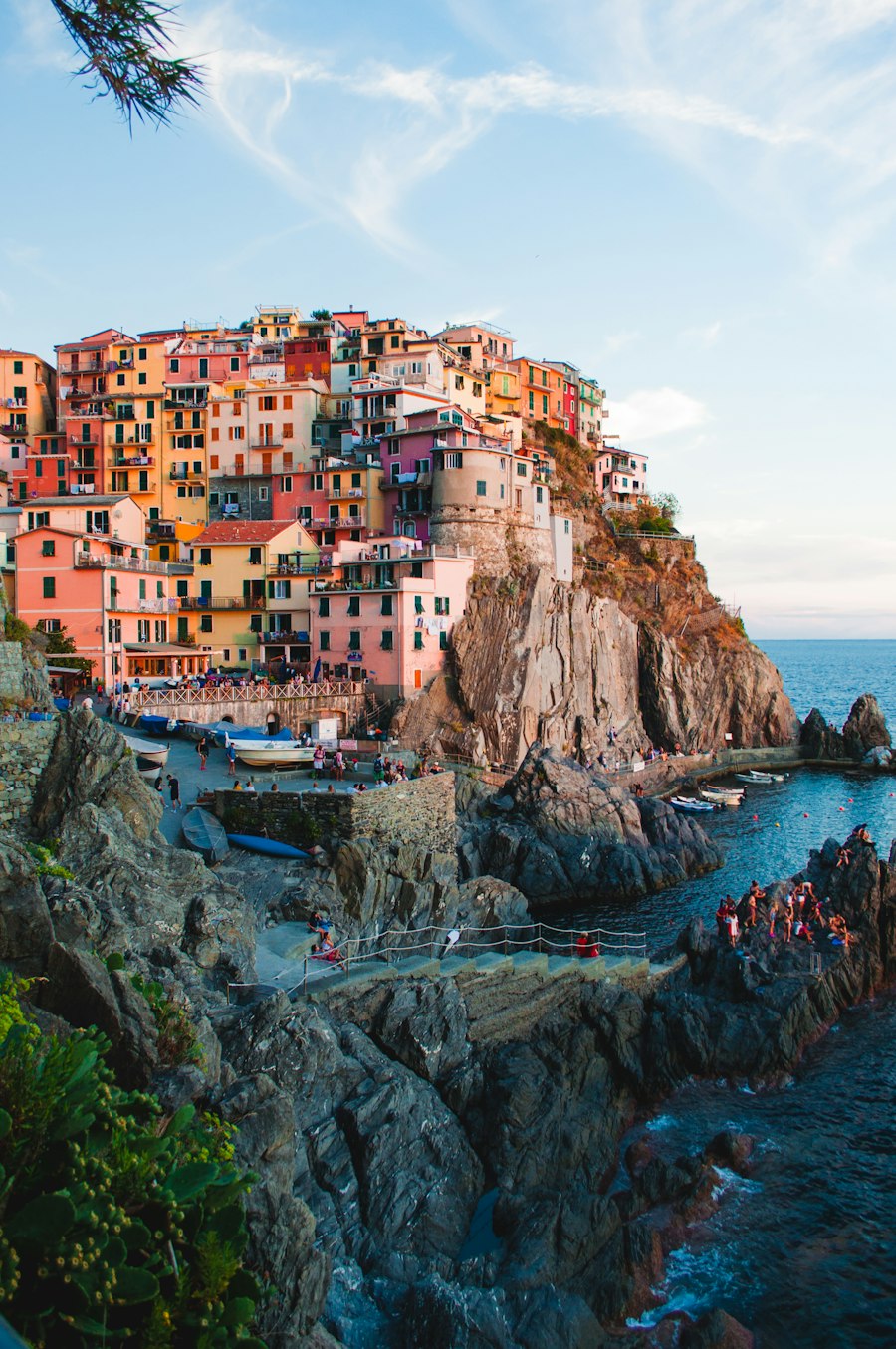
Employment opportunities for international workers in Croatia span central commercial centers, deep-water logistics ports, and the Adriatic construction and tourism corridors:
 Zagreb Region
IT, Commerce & Corporate
Croatia’s financial and administrative engine, offering extensive career pathways in software engineering, telecommunications, financial services, and regional HQ operations.
 Rijeka & Kvarner Port
Maritime Logistics & Freight
Northern Adriatic transportation hub with constant operational demand across international freight forwarding, shipping logistics, warehouse coordination, and heavy civil works.
 Split, Zadar & Dubrovnik
Hospitality, Marine & Trades
World-renowned coastal corridor characterized by high seasonal and year-round quotas in hotel management, yacht maintenance, specialty construction, and food services.
Single Permit criteria and compliance requirements
Employers and candidates must satisfy defined statutory conditions under Croatian administrative law:
Single Permit via Labor Market Test / Shortage List
The hiring company must be actively registered, demonstrate economic activity, and have no outstanding tax or social security arrears. If the position is not on the HZZ shortage list, a 15-day labor market test must confirm no qualified domestic worker is available.
Croatian EU Blue Card for Specialized Talent
Designed for highly qualified professionals possessing higher education diplomas (equivalent to EQF Level 6 or above). The salary offered must equal or exceed 1.5 times the average gross annual salary published by the Croatian Bureau of Statistics.
Notice: Croatian immigration rules and quotas are subject to ministerial directives. Applicants must ensure employers meet statutory compliance thresholds before submission.
Typical document requirements (illustrative)
Standard document packages required during MUP filings:
Valid Passport Copy
Color copy of biometric passport pages with at least 3 months validity past the intended stay.
Binding Employment Contract
Signed employment contract specifying occupational classification, working hours, and wage scale.
Criminal Record Extract
Certified police clearance from home country, translated into Croatian by a court-certified interpreter.
Evidence of Qualifications
Diplomas, vocational licenses, and verified CV evidencing expertise relevant to the position.
Proof of Accommodation
Notarized lease agreement or employer-provided housing confirmation meeting municipal living standards.
Biometric Identification Photos
ICAO-compliant biometric photographs conforming to MUP border control specifications.
Document requirements depend on individual circumstances and the regional MUP jurisdiction handling the submission.
Step-by-step general process in Croatia
Procedural milestones from HZZ assessment to biometric ID card collection:
Labor Market Test via HZZ (Test tržišta rada)
The Croatian employer requests a labor market test from the Croatian Employment Service (HZZ) to determine if domestic or EU jobseekers can fill the vacancy, unless the position is on the designated shortage list.
Single Permit Application to MUP (Jedinstvena dozvola)
Upon positive opinion from HZZ (or if exempt by shortage list), the employer or foreign applicant submits the Single Residence and Work Permit application to the competent Police Administration (MUP).
Inter-Agency Clearance & Security Checks
The Ministry of the Interior (MUP) verifies criminal records, public order clearances, tax standing of the employer, and issues the official permit decision.
Entry Visa (Type D) if Applicable
If the applicant’s nationality requires an entry visa to enter the Schengen Area, they apply for a Long-Stay Type D Visa at the Croatian diplomatic mission abroad, presenting the MUP permit approval.
Biometrics & Residence Card Issuance
Upon arrival in Croatia, the applicant registers address at the local police station (MUP) within 3 days, provides biometric fingerprints, and receives their physical biometric residence card (boravišna iskaznica).
 MUP Coordination
Unified Single Permit
The Croatian Single Permit coordinates both HZZ labor verification and MUP residence adjudication into one decision valid for up to 3 years.
Croatia-specific questions
The Single Permit is an integrated administrative decision issued by the Croatian Ministry of the Interior (MUP) that simultaneously grants both legal residency and authorization to work for a specific designated employer in Croatia.
If an occupation is formally listed on the Croatian Employment Service (HZZ) Shortage List (deficitarne profesije)—which commonly includes specific construction trades, hospitality specialists, and medical personnel—the employer is legally exempt from conducting the labor market test, speeding up the submission.
Under Croatian Foreigners Act amendments, Single Permits can be granted for up to 3 years depending on the duration of the employment contract, with renewals allowed subject to continued lawful employment.
Croatian legislation provides a statutory transition window (grace period) allowing foreign workers who lose their employment through no fault of their own a defined period (typically up to 60 days) to register with HZZ and seek new qualifying employment without immediate permit revocation.
No. As an EU and Schengen Member State, Croatia accords full freedom of movement to EU/EEA and Swiss citizens. They may work without work permits and simply submit a standard temporary residence registration certificate with the police station after 90 days.
Official Croatian Authorities
Verify current legal regulations, shortage occupational catalogs, and consular instructions directly on official state portals.
Central ministry responsible for citizenship, border control, and residence/work permit adjudications.
National employment agency managing labor market test protocols and publication of shortage profession registers.
Central e-government hub outlining administrative rights and legal responsibilities for foreign nationals.
Regulatory Review Notice
Information reviewed: October 2025. Requirements may change. Always verify with official sources.
Important Regulatory Disclaimer
ORSA provides guidance and informational services only. Immigration requirements vary by nationality, employment circumstances, and the applicable legal framework. Visa and permit approvals are determined solely by the relevant government authorities. No outcome is guaranteed. Information on this website is for general informational purposes and may change. Always verify requirements with official government sources.
Official regulations and immigration policies are subject to legislative amendment. Applicants must verify specific eligibility criteria with accredited authorities.
Let's talk about your next chapter.
Start with a structured, one-on-one preliminary assessment. We clarify visa criteria, employer obligations, and procedural timelines so you can plan with certainty.
Preliminary evaluations do not establish legal representation or guarantee visa issuance.